
Locking washers that don't damage the mating surface
Is there a locking washer that does not scratch stainless steel?
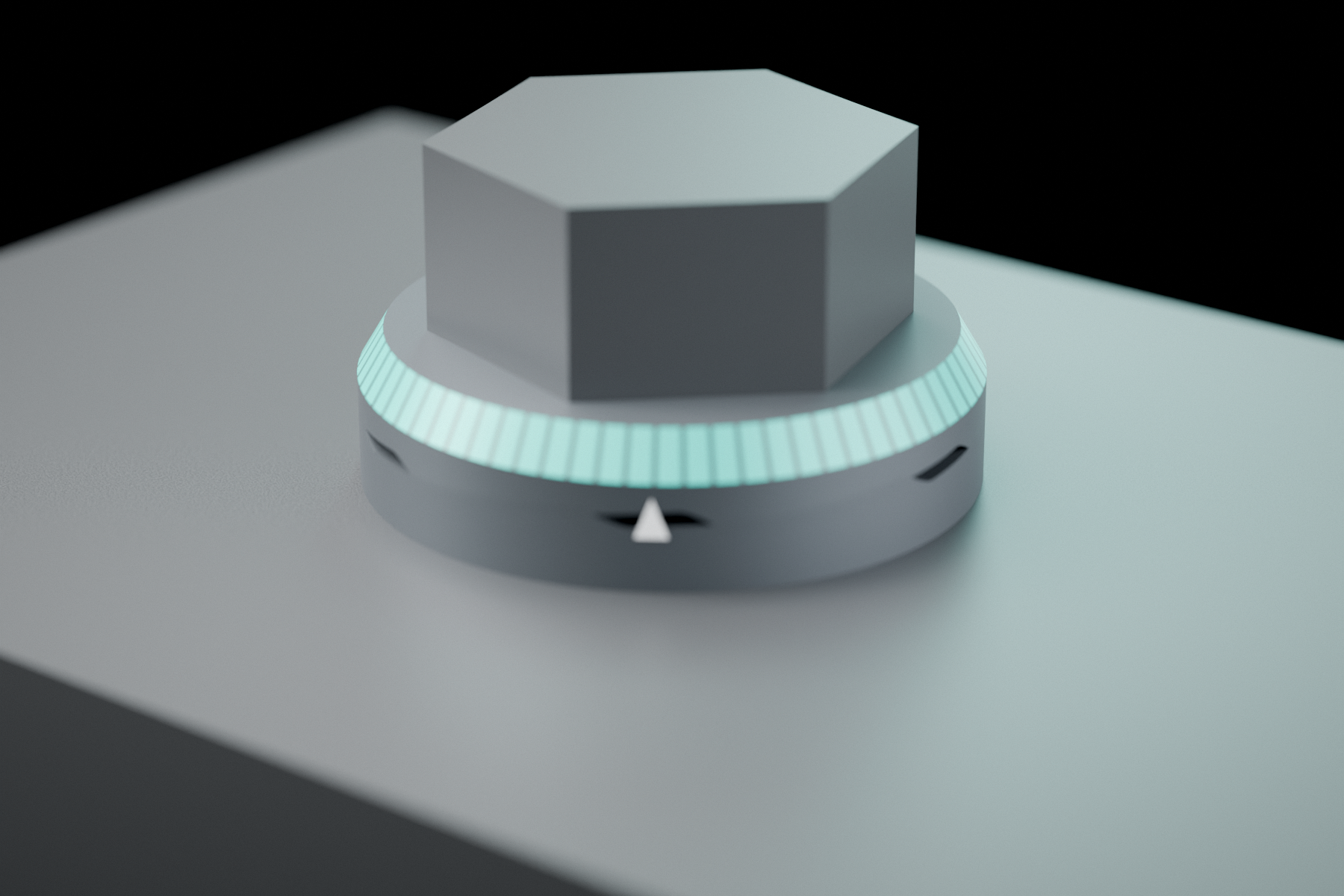
Yes. ISOKLAMP CFR reacts its wedge torque internally between its own two rings, so both outer bearing faces stay ground smooth at Ra ≤ 0,8 µm and leave no mark on 316L. The passive layer stays intact, which is what corrosion resistance depends on.
What locking method suits anodised aluminium?
A non-penetrating device. On anodised aluminium the anodic layer is the corrosion protection, and breaking it puts bare aluminium against hardened steel in a galvanic couple with an unfavourable area ratio. Where marking is genuinely acceptable, a wedge pair remains the cheaper rotational lock, and that is the trade being made.
Which washers damage plated or coated bearing surfaces?
Any device that secures by biting: serrated flange nuts, external and internal tooth washers, and wedge-locking pairs with radial teeth. They break zinc-flake, galvanising, paint, anodising, tin and silver plating at the point of highest contact pressure, which is exactly where moisture collects and nobody inspects.
How do I secure a bolt without marking the joint face?
Move the securing action off the joint face and onto internal cam faces. The rotation lock then comes from the geometric condition that the ramp lead angle exceeds the thread lead angle, rather than from friction against your component, so it works on ground, plated and coated surfaces alike.
Which locking devices damage the mating surface, and why
| Locking device | How it holds | Marks the mating face | Excluded on |
|---|---|---|---|
| Serrated flange nut, DIN 6923 | teeth bite the surface | Yes, by design | coated, anodised, aluminium, CFRP |
| Wedge-locking washer pair | radial teeth react the cam torque | Yes — teeth must be harder than the component | anodised, painted, CFRP, soft substrates |
| Tooth / star lock washer | teeth bite | Yes | all coated surfaces |
| Durlok and similar | ratchet teeth | Yes | coated, soft, composite |
| Nylon-insert nut, ISO 7040 | thread interference | No | 120 °C ceiling, hygienic, cryogenic |
| Anaerobic threadlocker | adhesive in the thread | No | passive substrates, cure time, single use |
| ISOKLAMP CFR | internal helical wedge between its own two rings | No — Ra ≤ 0,8 µm ground faces | — |
The mechanism matters. A wedge-locking washer works by the cam angle exceeding the thread lead angle, which is sound physics — but the cam torque has to be reacted somewhere, and in that design it is reacted by teeth gripping your component. The requirement is explicit in the manufacturers’ own documentation: the teeth must be harder than the mating surface.
What the damage actually causes
On galvanised, zinc-flake and painted steel the teeth break the coating at exactly the point of highest contact pressure and moisture ingress. That is a corrosion initiation site under the head of the fastener, where nobody will see it.
On anodised aluminium the anodic layer is the corrosion protection. Breaking it puts bare aluminium in contact with a hardened steel washer, which is a galvanic couple with a large area ratio working against the aluminium.
On CFRP the teeth break fibres and initiate delamination. This is why the entire toothed-device category is excluded from composite primary and secondary structure by design practice.
On 316L in hygienic service the teeth destroy the passivation layer, creating both a corrosion site and a bacterial harbourage site in the same place. Bolt locking for hygienic equipment →
On plated busbars they destroy the tin or silver plating on a joint that has to stay conductive, and start galvanic corrosion in the current path. Why busbar joints lose clamp force →
Surfaces where toothed devices are excluded outright
Anodised aluminium · painted and powder-coated structures · hot-dip galvanised and zinc-flake steel · CFRP and GFRP laminates · 316L hygienic surfaces · plated copper and aluminium busbars · magnesium castings · thin-wall and soft substrates where the teeth crush rather than bite.
How ISOKLAMP reacts its wedge torque without teeth
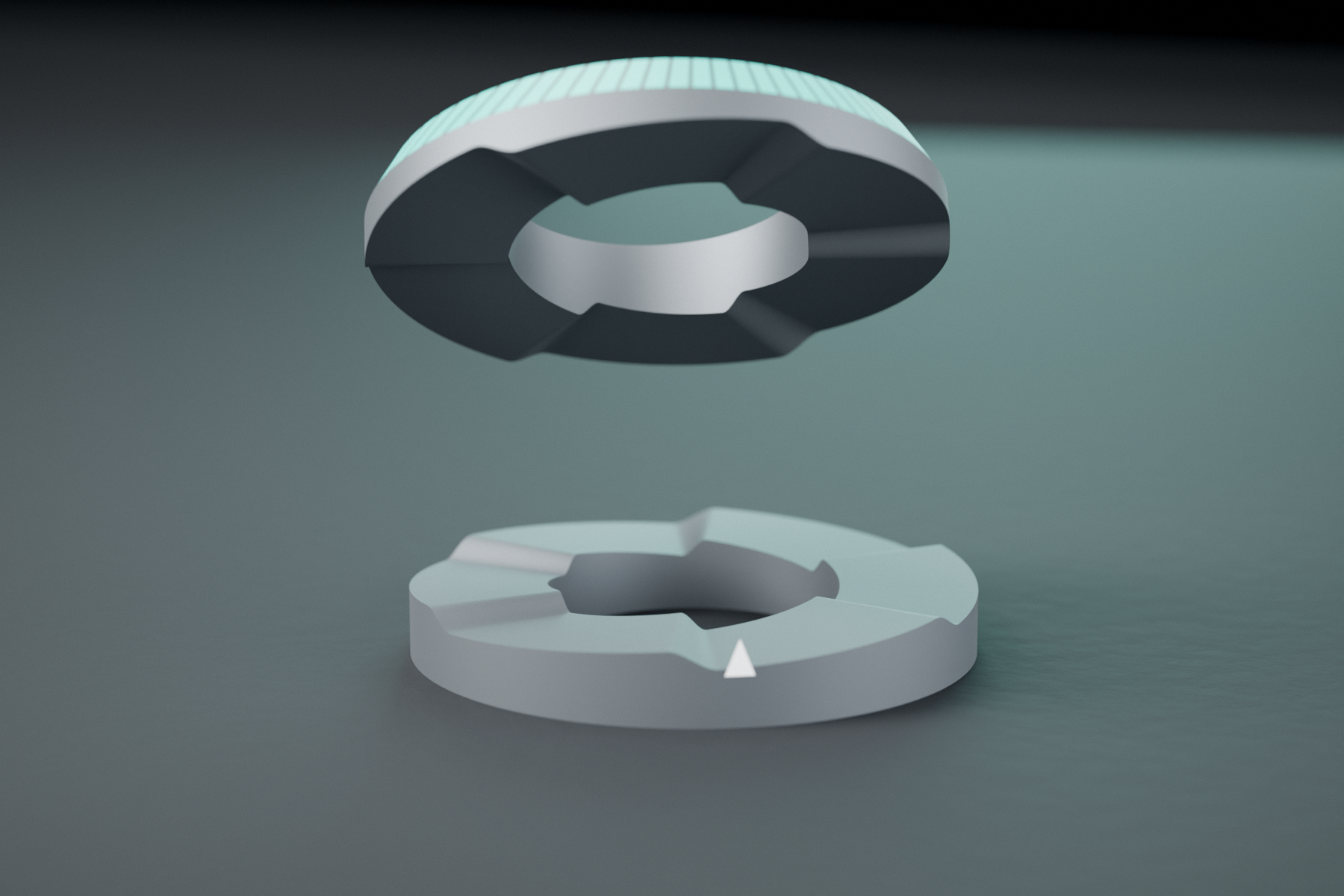
The wedge reaction is taken between the two rings of the washer itself, on a multi-start helical ramp with a 4,5° lead angle. Nothing needs to grip your component.
That frees both outer faces to be exactly what a bearing face should be: flat, ground to Ra ≤ 0,8 µm, with a generous bearing area to keep contact pressure down on soft substrates.
Does a smooth face still resist rotation?
Yes, and it does not depend on friction against your component at all.
Rotation resistance comes from the geometric condition α_c > β: the ramp lead angle (4,50°) exceeds the bolt’s thread lead angle (2,48° on M16 × 2,0). The nut cannot rotate backwards without climbing its own ramp, which elongates the bolt and increases clamp force.
Because the mechanism is geometric rather than frictional, it is indifferent to lubrication of the thread or the bearing faces — which is not true of prevailing-torque nuts, jam nuts or any friction-based device.
Approved surfaces
| Surface | Toothed / serrated devices | ISOKLAMP CFR |
|---|---|---|
| Bare structural steel | Suitable | Suitable |
| Zinc-flake, galvanised, painted | Coating destroyed | Suitable |
| Anodised aluminium | Excluded | Suitable |
| Magnesium castings | Excluded | Suitable |
| CFRP / GFRP laminate | Excluded, delamination risk | Suitable |
| 316L hygienic surfaces | Excluded, passivation damage | Suitable |
| Plated copper / aluminium busbar | Excluded, plating damage | Suitable |
| Titanium | Marginal | Suitable |
Questions
- Do lock washers damage the mating surface?
- Most locking washers hold by biting the mating face. A wedge-locking washer pair reacts its cam torque through radial teeth that must be harder than your component; a serrated flange nut is designed to gouge. On anodising, passivation, zinc-flake, paint, aluminium, magnesium and CFRP, that is a corrosion or delamination initiator.
- Can I use a wedge-locking washer on anodised aluminium?
- No. On anodised aluminium the anodic layer is the corrosion protection. Breaking it with the radial teeth puts bare aluminium in contact with a hardened steel washer, which is a galvanic couple with a large area ratio working against the aluminium.
- What locking washer works on CFRP?
- Toothed devices are excluded from composite primary and secondary structure by design practice, because the teeth break fibres and initiate delamination. ISOKLAMP CFR reacts its wedge torque internally between its own two rings, so both outer bearing faces are ground smooth to Ra ≤ 0,8 µm with a generous bearing area to keep contact pressure down.
- Will a locking washer break my galvanising?
- A toothed device will. On galvanised, zinc-flake and painted steel the teeth break the coating at exactly the point of highest contact pressure and moisture ingress. That is a corrosion initiation site under the head of the fastener, where nobody will see it.
- Does a smooth-faced washer still stop the bolt rotating?
- Yes, and it does not depend on friction against your component at all. Rotation resistance comes from the geometric condition α_c > β: the ramp lead angle of 4,50° exceeds the bolt's thread lead angle of 2,48° on M16 × 2,0. The nut cannot rotate backwards without climbing its own ramp, which elongates the bolt and increases clamp force. Because the mechanism is geometric rather than frictional, it is indifferent to lubrication.
- What surface finish do the ISOKLAMP faces have?
- Both outer bearing faces are flat and ground to Ra ≤ 0,8 µm, with a generous bearing area to keep contact pressure down on soft substrates.